
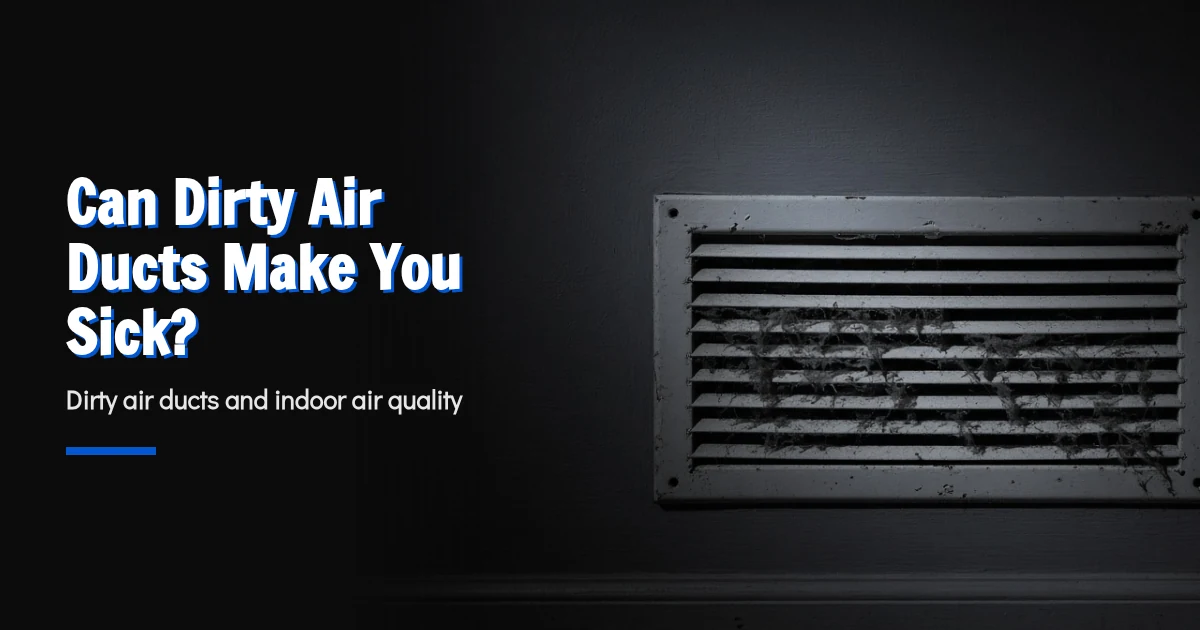
Dirty air ducts do not usually make a healthy person ill on their own. What they can do is recirculate dust, pollen, pet dander, mold spores and other irritants every time the heating or cooling system runs. If you already have allergies or asthma, that recirculated air can keep symptoms going inside the house even when the outdoor air is not the problem.
The link between dirty ducts and indoor air quality is real, but it is also easy to overstate. Cleaning helps when there is actual buildup to remove. It will not fix humidity, a weak filter or fumes from new paint or carpet. This article walks through what is actually in dirty ducts, which signs point to the ductwork, and what cleaning can and cannot change.
Can dirty air ducts actually make you sick?
For someone with no respiratory issues, ordinary household dust in the ducts often causes no noticeable symptoms. For someone with dust-mite allergies, pollen sensitivity or asthma, the same airflow can mean congestion or irritated eyes that ease when they leave the house.
The path is simple. Return vents pull air from the rooms, the system conditions it, and supply vents push it back out. Anything sitting in the ducts can ride that loop into every room the system serves. The ducts become a distribution path, not the only source of indoor irritants.
Duct cleaning is not a medical treatment. If symptoms are persistent or severe, talk to a doctor as well. An inspection is still useful when the pattern points to the HVAC system.
What is actually inside dirty air ducts?
Most residential duct buildup is ordinary household material, not a toxic spill. It can still be an irritant once the blower moves it around.
- Dust and dust-mite material. Household dust is the bulk of what collects in most systems. Dust mites feed on that organic debris, and their waste is a common allergen. The ducts do not create the mites, but they can hold and redistribute the material the mites live in.
- Pollen. Pollen comes in through doors and windows and can settle in the ducts during months when the system runs less. The first heat or cooling cycles of a new season sometimes push that stored pollen back into the rooms.
- Pet dander. Homes with dogs or cats collect lightweight skin flakes faster. You may see hair or film around the vent openings sooner than in a pet-free house.
- Mold spores. Mold needs moisture as well as dust. Not every dark smear in a duct is mold. When moisture and organic material are both present, growth can start, and spores travel with the air. If mold is the main issue, cleaning has to include the moisture source, not just the visible debris.
- Pest debris. Rodents or insects can leave droppings, nesting material or a carcass in the ducts. A foul smell that does not match ordinary mustiness is a reason to deal with the pest problem first, then clean.
- Construction dust. After a remodel, drywall dust and sawdust can sit deep in the system and keep circulating long after the work is finished.
How do you know if the ducts are affecting your indoor air quality?
Other problems can look the same, so look for a pattern rather than one sign in isolation:
- Dust returns to furniture and floors quickly after you clean
- Allergy symptoms are worse at home and ease when you are away
- You see a puff of dust or debris when the blower starts
- A musty or stale smell shows up when the system runs, especially at startup
- The ducts have not been cleaned in a long time and you can see buildup at the openings
- You have pets and notice hair or dander around the vents
- A recent renovation left dust circulating no matter how often you wipe surfaces
If only one of those is true, the main cause may be something else: a basic filter, high humidity, fumes from furnishings, or outdoor air leaking into the house. An air duct evaluation can help sort the ducts from those other sources.
When is mold in the ducts a separate problem?
Mold in the ductwork is one of the cases where cleaning matters for more than comfort. Spores can reach every room the system serves. Visible growth on a vent, inside an accessible duct, or on the air handler or coil should be inspected promptly.
Cleaning mold is not the same as a routine dust cleaning. The growth has to be removed, the coil, blower and drain pan should be included, and the moisture source has to be fixed. Failed insulation that is causing condensation may need repair or replacement. A company that only offers a cleaning, and will not talk about moisture, is not solving the cause.
Ordinary dark dust can look alarming and still not be mold. That is another reason to inspect before assuming the scope of work.
Does air duct cleaning help with allergies?
It can, when there is a real load of dust-mite material, pollen, dander or mold in the ducts to remove. Taking that material out of the air path reduces one source of triggers.
It will not remove allergens from carpet, bedding, upholstery or the pets themselves, and it will not stop pollen that comes in through open doors and windows. Clean ducts plus dusty rooms will still leave plenty to react to. Cleaning is one step in lowering the irritant load, not the whole plan.
What changes after a professional cleaning, and what does not?
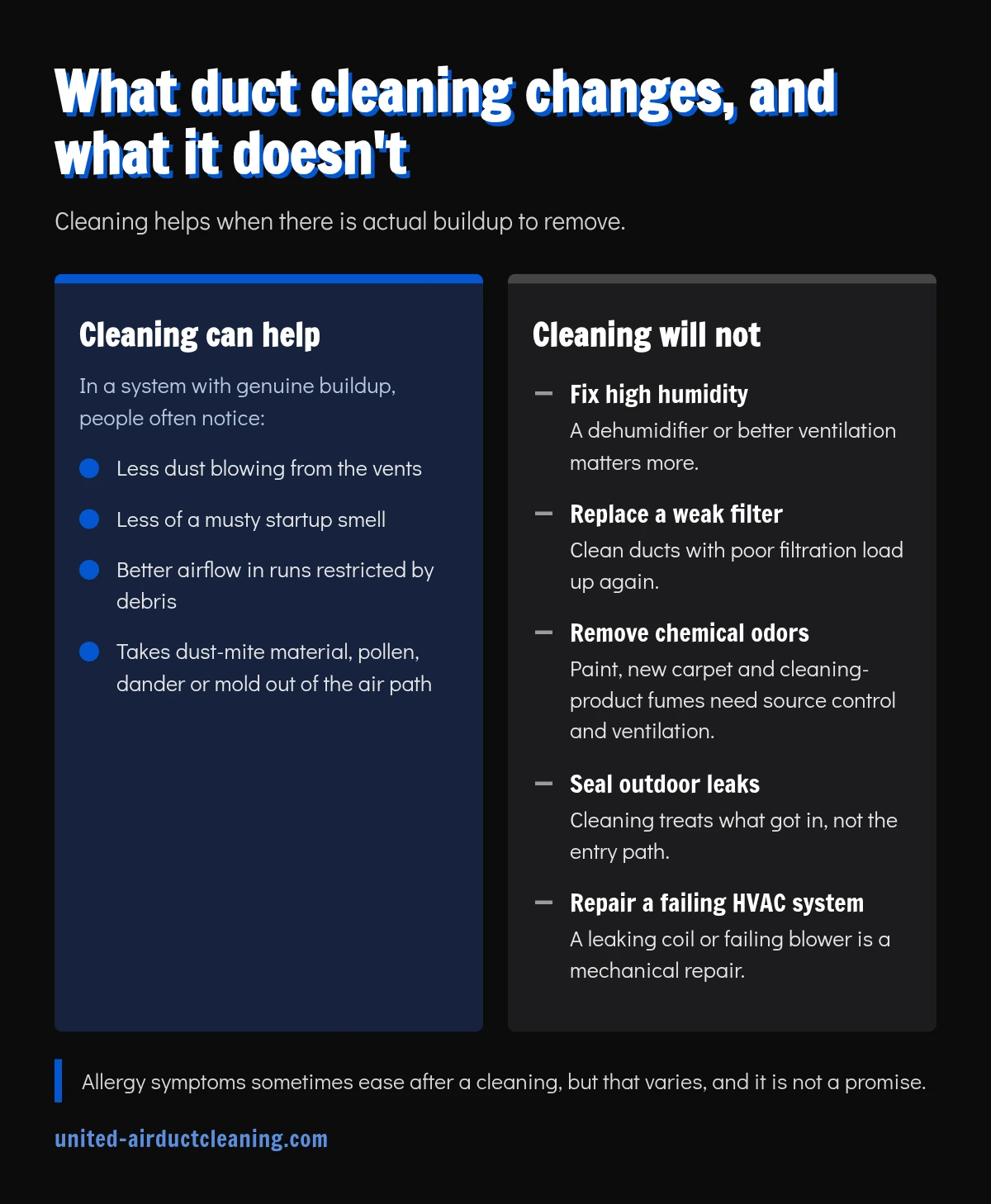
In a system with genuine buildup, people often notice less dust blowing from the vents, less of a musty startup smell, and better airflow in runs that were restricted by debris. Allergy symptoms sometimes ease, but that varies, and it is not a promise.
Cleaning will not do the following:
- Fix high humidity. Condensation on windows or a damp feeling in the house is a moisture problem. A dehumidifier or better bath and kitchen ventilation matters more than the ducts in that case.
- Replace a weak filter. A thin fiberglass filter lets a lot of particles into the system. A better filter, if the equipment can handle it, catches more of that material before it enters the ducts. Clean ducts with poor filtration will load up again.
- Remove chemical odors. Fumes from paint, new carpet or cleaning products are not something a duct cleaning removes. Source control and ventilation are the right tools there.
- Seal outdoor leaks. If outdoor air is entering through gaps in the house, cleaning treats what already got in, not the entry path.
- Repair a failing HVAC system. A leaking coil or a failing blower is a mechanical repair, not a cleaning job. Those are separate services, including air conditioning cleaning when the equipment itself needs attention.
When should you stop looking and call?
You can take off a vent cover, shine a light inside and look for heavy buildup, moisture or obvious growth. A light film of dust is common. More than that, or any of the signs below, is a reason to book an inspection:
- Visible mold on or inside vents, the air handler or accessible ducts
- A musty or rotting smell that gets stronger when the system runs
- A known pest problem and a chance that debris is still in the ducts
- Renovation dust that keeps circulating
- Respiratory symptoms that ease when you leave the house and return when you come back
A useful company will inspect first, show you what they found, and give a written estimate before work starts. If they cannot explain the process, look elsewhere.
For a standard cleaning, see our air duct cleaning services and residential air duct cleaning. If sanitation after pests or odors is the issue, start with air duct sanitation.
Frequently asked questions
Can dirty air ducts cause headaches?
They can contribute when the system is blowing dust, odors or mold spores into the rooms, but headaches have many causes. If the pain lines up with the HVAC running, or eases when you are away from home, the ducts are worth inspecting. Do not treat cleaning as a diagnosis.
Does duct cleaning help with pet allergies?
It can reduce the dander and hair circulating through the vents, which helps some people. It does not remove dander from furniture, carpet or the pets themselves, so it works best as one step, not the only one.
Should I have my air ducts cleaned when I move into a home?
It is worth an inspection, especially if you do not know the home’s history, there are pets, or there was recent work. Cleaning is useful when an inspection finds buildup. It is not automatic just because the house is new to you.
Can I clean my air ducts myself?
You can clean vent covers and the first few inches you can reach with a vacuum and a damp cloth. A household vacuum cannot pull debris through a whole duct system, and rough brushing can tear flex duct or loosen joints. Leave the rest of the system to a technician with the right equipment.
How long does indoor air quality take to improve after cleaning?
There is no single timeline. Some people notice less dust from the vents right away. Allergy symptoms, when they ease at all, depend on the other sources in the house and on whether moisture or filtration problems were also fixed.
Want a clear look at what is in your ducts? Call United Air Duct Cleaning
If dust keeps coming back, the vents smell musty when the system starts, or symptoms ease when you leave the house, an inspection is the next step. Call United Air Duct Cleaning at (855) 228-6182 or get a quote.